| 일 | 월 | 화 | 수 | 목 | 금 | 토 |
|---|---|---|---|---|---|---|
| 1 | 2 | 3 | ||||
| 4 | 5 | 6 | 7 | 8 | 9 | 10 |
| 11 | 12 | 13 | 14 | 15 | 16 | 17 |
| 18 | 19 | 20 | 21 | 22 | 23 | 24 |
| 25 | 26 | 27 | 28 | 29 | 30 | 31 |
- 3S-FORM Coaching Model과 뇌과학의 결합
- 정신 모형
- 결정적 관점 코칭
- 미위마인드 이석재
- 효과성 프레임워크
- 관점 코칭
- 관점 전환
- 3S-FORM Coaching Model
- 멘탈 모델
- Effectiveness Coaching Methodology
- Effectiveness Coaching Model
- 생각 파트너 이석재
- 효과성 코칭 방법론
- Sukjae Lee Ph.D.
- 효과성 코칭
- Effectiveness Coaching
- 코치올
- 미위마인드 mewemind.com
- 결정적 관점
- 원하는 결과
- 이종서 HR 컨설턴트
- 결정적 관점 전환
- 효과성 코칭 모델
- 멘탈 모델링 코칭
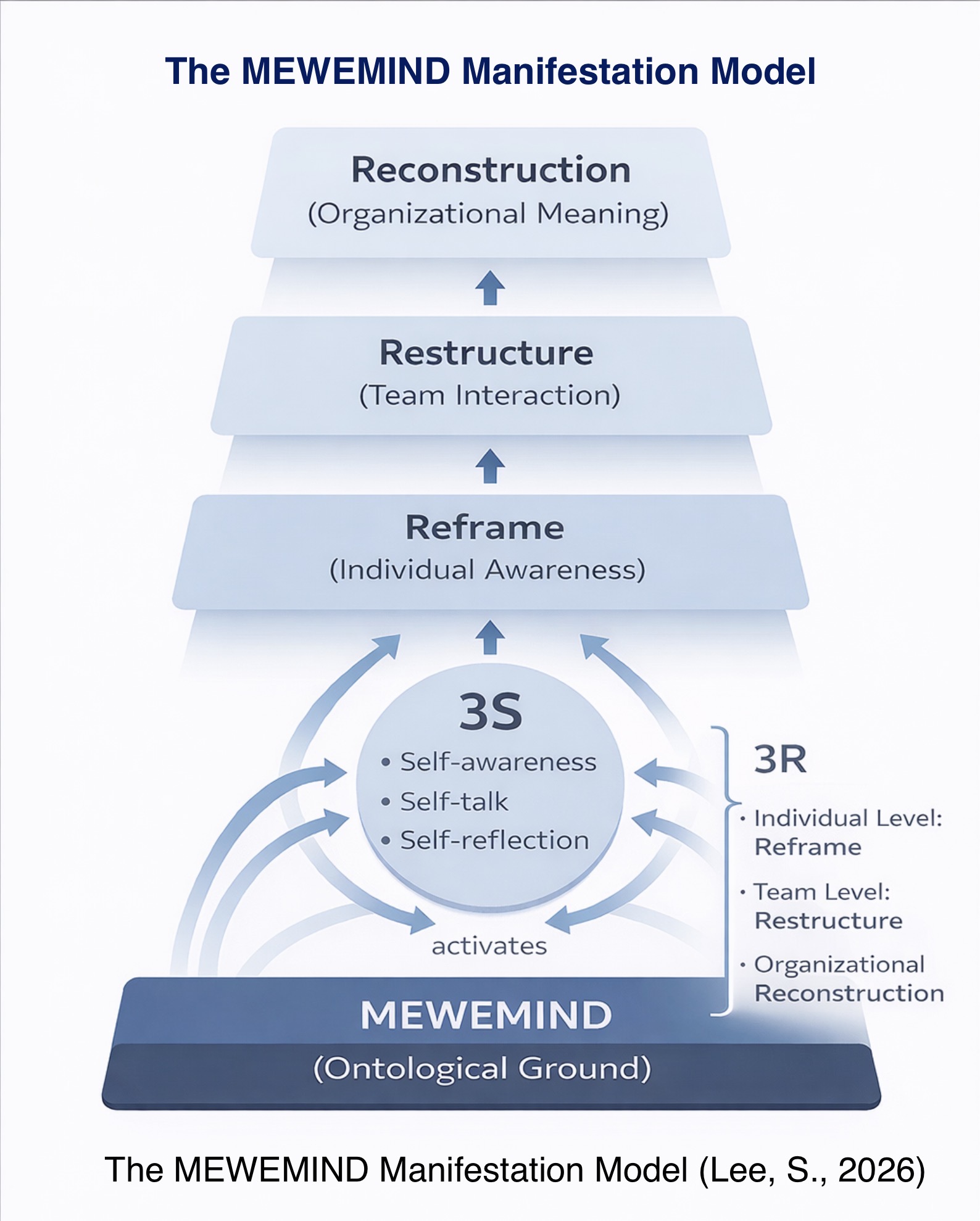
- The MEWEMIND Manifestation Model
- Mental Modeling Coaching
- 현장중심 코칭심리학
- mewemind
- 효과성 코칭의 이론과 실제
- 이종서 코치
- Today
- Total
미위마인드
Design and Create Your Life Proactively 본문
Design and Create Your Life Proactively
Sukjae Lee, Coach
Developer of the Effectiveness Coaching Methodology
February 27, 2026
In my book The Thought Revolution That Changes My Life (Lee, 2019), I emphasized the message:
“Design and create your life proactively!”
This does not mean that everyone must start a venture. Rather, it speaks to one’s posture toward life. I encourage people to live as active agents in shaping their own lives. When I have opportunities to deliver leadership lectures or conduct coaching sessions for startups, I often meet individuals who possess an entrepreneurial spirit—those who are constantly seeking opportunities to launch new ventures. I believe these individuals are precisely the kind of talent that can help build the strongest organizations. Leaders, in my view, should guide them the way marketers engage customers—by attracting, inspiring, and aligning them, rather than controlling them.
Many of you may wonder how to live in an era when reaching 100 years old is no longer extraordinary. My answer is clear:
Each person must live like an entrepreneur—proactively and independently. Only by doing so can you remain competitive as you age.
Tasks that are performed merely because someone instructs you to do them will increasingly be replaced by robots. In that sense, do not invest all your energy solely in securing employment at a large corporation. Working in a large corporation often means learning long-established practices developed over decades. You may spend ten years mastering yesterday’s routines rather than acquiring the capabilities needed for tomorrow. If you leave after such an experience, you may find yourself ill-equipped for the future.
For this reason, I advise challenging yourself through ventures or venture-related fields. Think and act with ownership.
The Importance of Specialized Knowledge
For startup professionals in particular, knowledge is critical. In the future, survival will depend on possessing highly specialized expertise. Just as a hammer is used for hammering and a saw for sawing when building a house, knowledge workers must develop deep specialization.
At the same time, just as both hammering and sawing are necessary to build a house, individuals with specialized knowledge must also know how to collaborate. Expertise without collaboration limits impact.
Reflect on Your MEWEMIND
From this perspective, I encourage startup professionals to reflect on their own MEWEMIND. Just as a sculptor holds a chisel and uncovers the hidden Pietà within a block of granite, you too will discover something within yourself by gradually carving away at your inner landscape.
To do this, you must understand your own “chisel”—your MEWEMIND (Lee, 2026). Do not allow yourself to be carried along by others’ expectations. First, identify what you truly desire, what you do well, and what you believe to be valuable.
Yet do not stop there. Based on MEWEMIND, cultivate collaboration and a sense of community as you design a venture-oriented life. This requires objectively evaluating yourself.
Responsibility as the Foundation of Leadership
Understanding yourself is essential because you cannot blame others for your choices. You must accept full responsibility for them. If someone else directs your actions, you may feel less accountable. But if you act for any reason you have consciously chosen, you can take responsibility.
The leadership we need begins with responsibility. Living proactively is, in other words, living on the foundation of responsibility (Lee, 2014).
When individuals possess a proactive consciousness about their own lives, commitment naturally follows. When many members within an organization demonstrate sincere and honest dedication rooted in this mindset, trust emerges within the organization.
In a modern society where collaboration is essential, charismatic leadership alone can sometimes harm an organization. Each person possesses strengths in particular domains that may surpass those of others. Better decisions are often made when many voices contribute to the discussion. Collective intelligence (or also called "group intelligence) functions when diverse perspectives are engaged.
Human Distinctiveness in the Age of AI
As artificial intelligence advances, modern individuals will likely have more time to focus attention on themselves. In such a world, the attitude of living proactively and the ability to think deeply are what express our humanity.
Individuals within organizations should become entrepreneurs in consciousness—agents with ownership. Rather than merely solving assigned problems, they must engage with the world and tackle emerging challenges. Such work cannot be replaced by AI robots.
In the long run, not working at a large corporation may turn out to be a great fortune. Organizations with many members who seek entrepreneurial opportunities are more likely to grow sustainably and survive over time.
The Role of Leadership in This Environment
In this environment, the leader’s role resembles marketing more than sales. In the past, leaders often managed employees as if they were salespeople closing deals—directing and controlling. Going forward, leaders must operate like marketers.
They must ask:
- What kind of work will help this person grow?
- How can we create conditions where this individual wants to remain in our organization longer?
- How can we align personal aspiration with organizational opportunity?
This requires a form of talent management leadership grounded in growth, alignment, and long-term development.
Reference
Lee, Sukjae (2026). Definition of MEWEMIND. https://mewemind.tistory.com/72
'코칭 노트' 카테고리의 다른 글
| 나의 꿈을 이루는 삶 (0) | 2026.03.08 |
|---|---|
| 들어가는 글 (0) | 2026.03.01 |
| MEWEMIND-Integrated Leadership: Activating Employee Engagement Through Relational Leadership (0) | 2026.02.26 |
| FORM이라는 공간 (0) | 2026.02.22 |
| Crisis Leadership Model: Integrating MEWEMIND with 3S–FORM Execution Architecture (0) | 2026.02.16 |


